

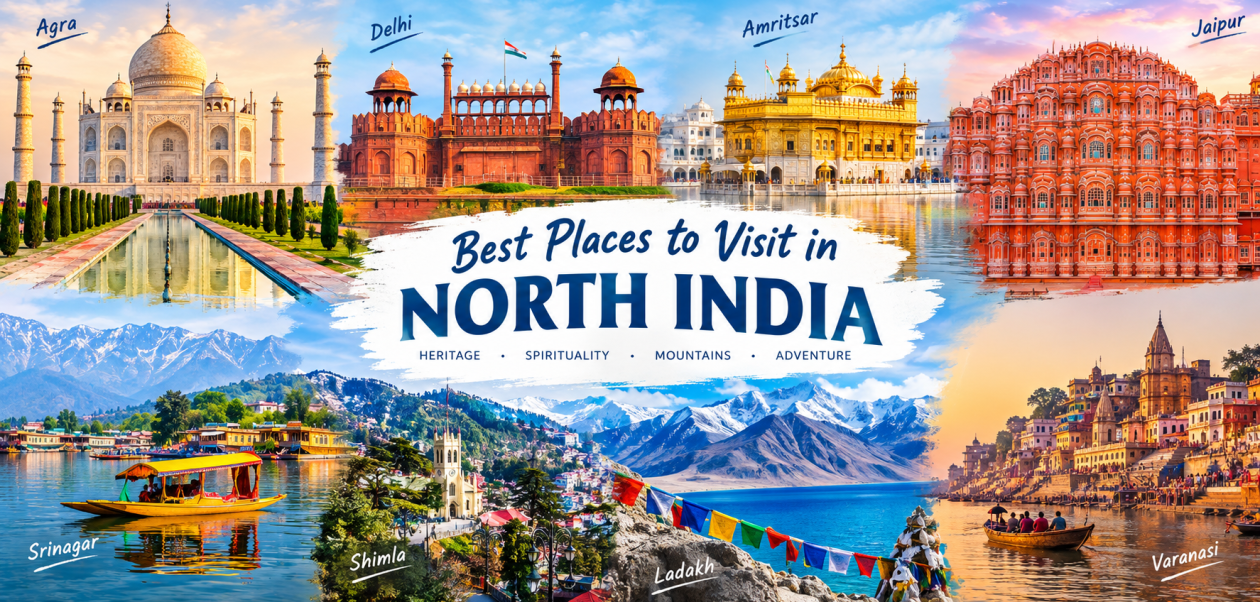
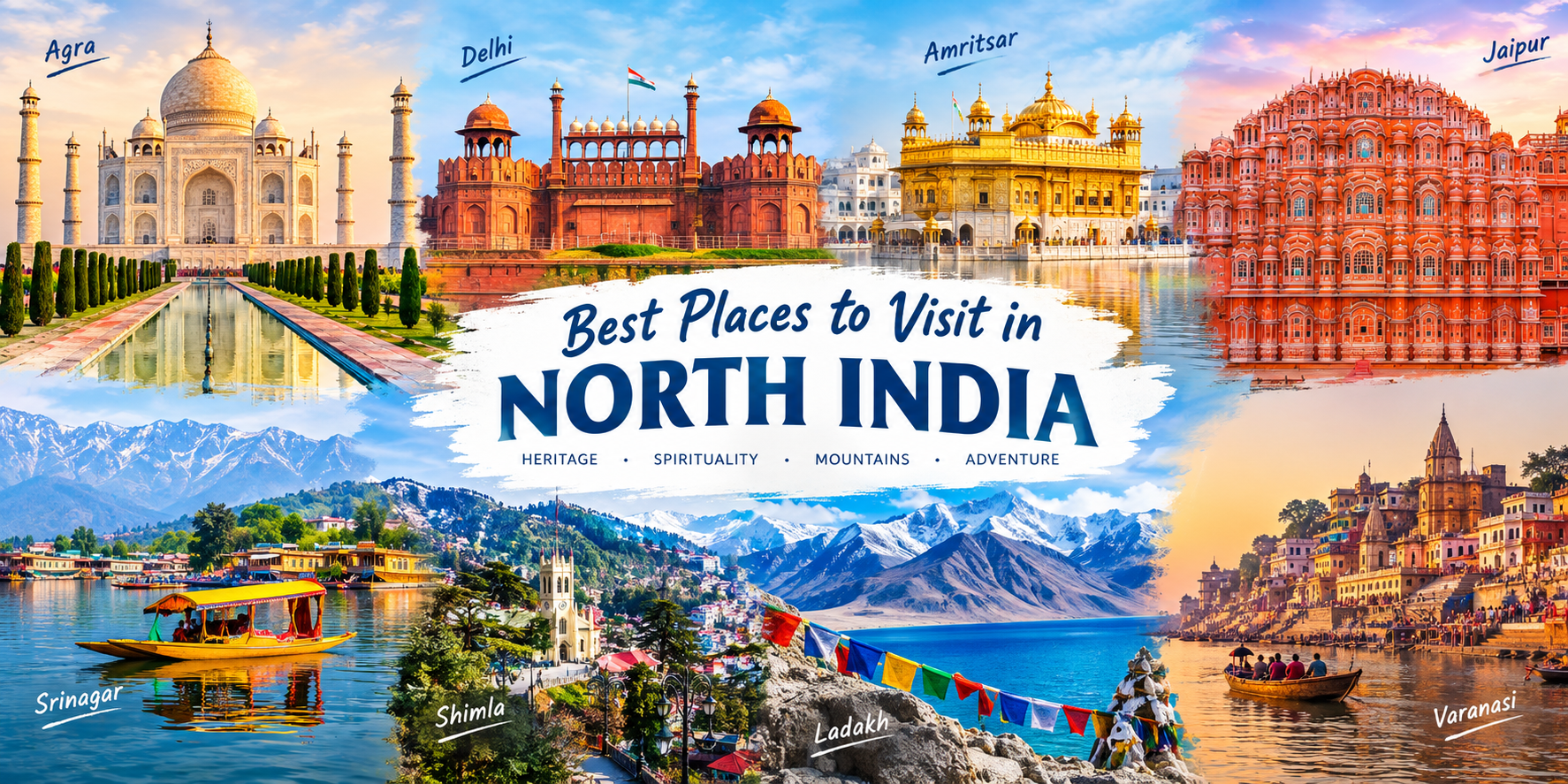
1. Delhi – Best for History, Food and Culture
Delhi is the natural starting point for many North India trips. India’s capital combines centuries-old monuments, Mughal architecture, colonial landmarks, religious sites, modern shopping districts and an extraordinary food scene.
The city’s major attractions include Red Fort, Qutub Minar, Humayun’s Tomb, India Gate and Jantar Mantar. Delhi has three UNESCO World Heritage Sites, making it particularly rewarding for history enthusiasts.
Top things to do in Delhi
- Explore the Red Fort
- Visit Qutub Minar
- See Humayun’s Tomb
- Walk through Chandni Chowk
- Visit Jama Masjid
- Explore India Gate and the National War Memorial
- Try Old Delhi’s famous street food
- Shop for handicrafts and textiles
Where to stay in Delhi
Luxury:
Ideal for travelers seeking a high-end hotel experience.
Mid-range:
Suitable for travelers looking for modern accommodation in South Delhi.
Budget:
A practical choice for travelers prioritizing location and value.
Recommended stay: 2–3 nights
Best for: First-time visitors, history lovers, foodies and families
2. Agra – Best for the Taj Mahal
Agra is home to the Taj Mahal, one of India’s most recognizable monuments and a UNESCO World Heritage Site.
But the Taj Mahal is only part of the story. Agra Fort and Fatehpur Sikri add important chapters to the city’s Mughal history. Agra is also a key stop on the Golden Triangle, linking Delhi, Agra and Jaipur.
Things to do in Agra
- Visit the Taj Mahal
- Explore Agra Fort
- Watch sunrise over the Taj Mahal
- Visit Mehtab Bagh
- Take a trip to Fatehpur Sikri
- Explore the city’s traditional markets
- Try Agra’s famous petha
Where to stay in Agra
Luxury:
Best suited to couples and travelers celebrating a special occasion.
Mid-range:
A full-service option suitable for families and leisure travelers.
Budget:
A straightforward option for travelers concentrating their budget on sightseeing.
Recommended stay: 1–2 nights
Best for: Couples, families, history lovers and first-time visitors
3. Jaipur – Best for Royal Heritage
Known as the Pink City, Jaipur is one of India’s most rewarding destinations for architecture, history and culture.
The city is packed with forts, palaces, markets and museums. Amber Fort, Hawa Mahal, City Palace and Jantar Mantar are among the main attractions.
Things to do in Jaipur
- Explore Amber Fort
- Photograph Hawa Mahal
- Visit City Palace
- Explore Jantar Mantar
- Visit Nahargarh Fort
- Shop for jewellery and textiles
- Enjoy a traditional Rajasthani meal
Where to stay in Jaipur
Luxury:
A resort-style choice for travelers seeking a premium experience.
Mid-range:
A heritage-style hotel suited to travelers who prefer character and traditional architecture.
Budget:
A practical base for exploring Jaipur without a luxury price tag.
Recommended stay: 2–3 nights
Best for: Couples, culture lovers, photographers and families
4. Amritsar – Best for Sikh Heritage and Food
Amritsar is one of Punjab’s most important cultural destinations and the home of Sri Harmandir Sahib, commonly known as the Golden Temple.
Beyond the temple, visitors can explore Jallianwala Bagh, the old city’s markets and the Attari-Wagah border ceremony. India’s official tourism portal highlights the city’s importance to Sikh heritage and Gatka traditions.
Things to do in Amritsar
- Visit the Golden Temple
- Experience the langar
- Visit Jallianwala Bagh
- Explore the old city
- Try Amritsari kulcha
- Visit the Attari-Wagah border
Where to stay in Amritsar
Luxury:
Suitable for travelers looking for a premium full-service hotel.
Mid-range:
A convenient choice for families and couples.
Budget:
Suitable for travelers who want a simple base close to the main attractions.
Recommended stay: 2 nights
Best for: Families, food lovers, spiritual travelers and culture enthusiasts
5. Rishikesh – Best for Adventure and Wellness
Rishikesh combines spirituality, yoga, wellness and outdoor adventure along the Ganga.
The destination is particularly popular for river rafting, yoga retreats, meditation and Ganga Aarti. India’s official tourism portal also highlights Rishikesh for activities such as rafting and bungee jumping.
Things to do in Rishikesh
- Attend the Ganga Aarti
- Go white-water rafting
- Visit Beatles Ashram
- Try yoga or meditation
- Explore the riverside
- Visit nearby waterfalls
- Explore local cafés and markets
Where to stay in Rishikesh
Luxury:
A good choice for a peaceful resort and wellness experience.
Mid-range:
Suitable for travelers seeking comfort at a moderate price.
Budget:
A practical choice for budget-conscious travelers.
Recommended stay: 2–3 nights
Best for: Adventure travelers, wellness seekers, couples and young travelers
6. Varanasi – Best for Spiritual Experiences
Varanasi is one of India’s most distinctive cultural destinations. The city revolves around the Ganga, its ancient ghats, temples, ceremonies and narrow historic lanes.
Things to do in Varanasi
- Take a sunrise boat ride
- Watch the evening Ganga Aarti
- Explore the ghats
- Visit Kashi Vishwanath Temple
- Take a trip to Sarnath
- Explore the old city
- Try Banarasi cuisine
Where to stay in Varanasi
Luxury:
Best for travelers interested in a heritage-style stay near the Ganges.
Mid-range:
A contemporary option with a cultural design focus.
Budget:
Suitable for travelers looking for a more affordable stay.
Recommended stay: 2–3 nights
Best for: Spiritual travelers, photographers and culture lovers
7. Shimla – Best for a Classic Hill Holiday
Shimla remains one of North India’s most popular hill stations. Its colonial architecture, mountain views and walkable central area make it an easy introduction to the Himalayas.
The Ridge, Mall Road, Jakhu Hill and the UNESCO-listed Kalka-Shimla Railway are among the highlights.
Things to do in Shimla
- Walk along the Mall
- Explore the Ridge
- Visit Jakhu Temple
- Take the toy train from Kalka
- Visit Kufri
- Explore Lakkar Bazaar
- Enjoy Himalayan viewpoints
Where to stay in Shimla
Luxury:
A heritage hotel suited to travelers looking for a refined stay.
Mid-range:
A good option for travelers looking for mountain views and contemporary accommodation.
Budget:
A practical choice for budget travelers.
Recommended stay: 2–3 nights
Best for: Families, couples and first-time Himalayan travelers
8. Manali – Best for Mountains and Adventure
Manali offers pine forests, mountain scenery, cafés, temples and access to high-altitude landscapes.
The destination is also a gateway for excursions into the higher Himalayas. India’s tourism portal describes Manali as a gateway to Rohtang Pass and highlights attractions such as Hadimba Devi Temple.
Things to do in Manali
- Visit Hadimba Devi Temple
- Explore Old Manali
- Visit Solang Valley
- Explore Vashisht
- Enjoy mountain cafés
- Take seasonal excursions into the surrounding Himalayas
Where to stay in Manali
Luxury:
A boutique luxury option for travelers wanting a distinctive mountain stay.
Mid-range:
Suitable for couples and families looking for resort facilities.
Budget: Hotel Kunzam – A simpler option for travelers prioritizing value.
Recommended stay: 3–4 nights
Best for: Couples, families, backpackers and adventure travelers
9. Srinagar – Best for Kashmir’s Lakes and Landscapes
Srinagar is one of the most scenic destinations in North India, famous for Dal Lake, shikara rides, houseboats and Mughal gardens.
The city’s location also makes it a convenient base for excursions toward destinations such as Gulmarg, Pahalgam and Sonamarg, subject to seasonal road and weather conditions. India’s tourism portal specifically highlights Dal Lake and shikara rides.
Things to do in Srinagar
- Take a shikara ride on Dal Lake
- Stay on or visit a traditional houseboat
- Explore Mughal gardens
- Visit the old city
- Shop for Kashmiri handicrafts
- Take day trips to nearby mountain destinations
Where to stay in Srinagar
Luxury:
A heritage-style luxury choice.
Mid-range:
Suitable for travelers seeking a quieter stay.
Budget:
A practical option for budget-conscious visitors.
Recommended stay: 3–4 nights
Best for: Couples, families, photographers and nature lovers
10. Leh-Ladakh – Best for High-Altitude Adventure
Ladakh feels dramatically different from the rest of North India. High mountain passes, Buddhist monasteries, barren valleys and blue alpine lakes create an extraordinary landscape.
The official tourism portal highlights Leh, Nubra Valley, Pangong Lake, Thiksey Monastery and other high-altitude attractions on its Ladakh itineraries.
Things to do in Ladakh
- Explore Leh Palace
- Visit Thiksey and other monasteries
- Explore Nubra Valley
- Visit Pangong Lake
- See the Indus-Zanskar confluence
- Explore traditional villages
- Take a scenic mountain road trip
Where to stay in Leh
Luxury:
A premium option for travelers wanting comfort in Leh.
Mid-range:
Suitable for travelers looking for a comfortable base.
Budget:
Popular with backpackers and younger travelers.
Recommended stay: 5–7 nights
Best for: Adventure travelers, photographers and mountain enthusiasts
Important: Altitude matters here. Allow time for acclimatization and avoid planning strenuous activities immediately after arrival.
11. Mussoorie – Best for a Relaxed Mountain Escape
Mussoorie is an accessible Himalayan getaway known for mountain views, colonial-era character and a lively central market.
Things to do in Mussoorie
- Walk along Mall Road
- Visit Lal Tibba
- Explore Kempty Falls
- Enjoy Himalayan viewpoints
- Visit Landour
- Explore local cafés and bakeries
Where to stay in Mussoorie
Luxury:
Best for travelers seeking a full-service luxury resort.
Mid-range:
Suitable for families and couples wanting resort facilities.
Budget:
A practical option near the central sightseeing area.
Recommended stay: 2–3 nights
Best for: Families, couples and weekend travelers
12. Nainital – Best for Families
Built around the beautiful Naini Lake, Nainital is one of Uttarakhand’s classic hill stations.
The town is particularly popular with families because sightseeing can be combined with boating, shopping and easy day trips.
Things to do in Nainital
- Go boating on Naini Lake
- Walk along Mall Road
- Visit Snow View Point
- Explore nearby viewpoints
- Visit local temples
- Take a day trip around the lake district
Where to stay in Nainital
Luxury:
A heritage-style choice for a more memorable stay.
Mid-range:
Suitable for travelers seeking views and a quieter atmosphere.
Budget:
A practical option for travelers watching their accommodation budget.
Recommended stay: 2–3 nights
Best for: Families, couples and short mountain breaks
13. Haridwar – Best for Pilgrimage and Ganga Aarti
Haridwar is one of India’s major pilgrimage destinations and an important gateway to the Himalayan region.
The city’s spiritual atmosphere centers around the Ganga and Har Ki Pauri, where visitors gather for evening rituals.
Things to do in Haridwar
- Attend Ganga Aarti at Har Ki Pauri
- Visit Mansa Devi Temple
- Explore local markets
- Walk along the ghats
- Combine the visit with Rishikesh
Where to stay in Haridwar
Luxury:
A heritage-style luxury option.
Mid-range:
Suitable for travelers looking for a resort-style stay.
Budget:
A practical choice for travelers wanting to stay near the river.
Recommended stay: 1–2 nights
Best for: Pilgrims, families, spiritual travelers and culture enthusiasts
14. Dharamshala & McLeod Ganj – Best for Tibetan Culture and Mountains
Dharamshala and nearby McLeod Ganj combine Himalayan scenery with Tibetan Buddhist culture.
The destination is also a popular base for mountain walks and treks.
Things to do
- Visit the Tsuglagkhang Complex
- Explore McLeod Ganj
- Visit Tibetan monasteries
- Try Tibetan cuisine
- Walk around Bhagsu
- Plan the Triund trek if conditions and fitness allow
Where to stay
Luxury:
A comfortable choice for a premium mountain holiday.
Mid-range:
Suitable for families and couples.
Budget:
Zostel Dharamkot
A popular option for backpackers and younger travelers.
Recommended stay: 2–3 nights
Best for: Backpackers, couples, culture lovers and trekkers
15. Chandigarh – Best for Modern Architecture and a Short Break
Chandigarh offers a different experience from most North Indian destinations. Designed by Swiss-French architect Le Corbusier, the city is known for its planned layout, modernist architecture and green spaces.
The Capitol Complex is a UNESCO World Heritage Site, according to India’s tourism portal.
Things to do in Chandigarh
- Visit the Capitol Complex
- Explore Rock Garden
- Walk around Sukhna Lake
- Explore Sector 17
- Visit the Government Museum and Art Gallery
Where to stay
Luxury:
A good choice for business and leisure travelers.
Mid-range:
Suitable for travelers wanting a central location.
Budget:
A practical option for short stays.
Recommended stay: 1–2 nights
Best for: Architecture lovers, families and weekend travelers
Best Places in North India by Travel Style
| Travel Style | Recommended Destinations |
| History | Delhi, Agra, Jaipur |
| Spirituality | Varanasi, Haridwar, Rishikesh |
| Mountains | Shimla, Manali, Srinagar |
| Adventure | Ladakh, Manali, Rishikesh |
| Family | Nainital, Shimla, Jaipur, Amritsar |
| Couples | Kashmir, Manali, Agra, Jaipur |
| Food | Delhi, Amritsar, Lucknow, Varanasi |
| Backpacking | Rishikesh, Dharamshala, Manali, Leh |
| Architecture | Delhi, Jaipur, Chandigarh, Agra |
| Photography | Kashmir, Ladakh, Jaipur, Varanasi |
Best Time to Visit North India
North India covers a huge geographical area, so the ideal travel season depends on where you’re going.
October to March
This is generally a comfortable period for exploring destinations across the northern plains, including:
- Delhi
- Agra
- Jaipur
- Amritsar
- Varanasi
- Haridwar
Winter can be cold in northern cities and particularly chilly in the mountains, so pack accordingly.
March to June
The warmer months can be a good time to escape to higher elevations such as:
- Shimla
- Manali
- Dharamshala
- Mussoorie
- Nainital
July to September
The monsoon brings greener landscapes but can also cause heavy rain and road disruptions, particularly in mountainous areas. Check local weather and road conditions before traveling.
Summer for Ladakh
Ladakh is generally planned as a summer high-altitude destination, although exact accessibility depends on weather, roads and local conditions.
Best North India Itineraries
7-Day Golden Triangle Itinerary
Day 1–2: Delhi
Day 3: Agra
Day 4–6: Jaipur
Day 7: Return to Delhi
This is one of the simplest itineraries for first-time visitors.
10-Day North India Heritage & Culture Trip
Days 1–2: Delhi
Days 3–4: Agra
Days 5–7: Jaipur
Days 8–9: Amritsar
Day 10: Delhi
10-Day Himalayan Itinerary
Days 1–2: Delhi
Days 3–5: Shimla
Days 6–8: Manali
Days 9–10: Dharamshala
12-Day Spiritual Itinerary
Days 1–2: Delhi
Days 3–4: Haridwar/Rishikesh
Days 5–7: Varanasi
Days 8–9: Agra
Days 10–12: Jaipur
15-Day Himalayan Adventure
The official Incredible India tourism portal itself features a North India circuit connecting Delhi, Shimla, Manali, Leh and Srinagar, illustrating how these destinations can form a longer Himalayan journey.
North India Travel Budget
Your actual costs will vary considerably depending on hotel category, transportation and season.
| Travel Style | Approx. Daily Budget per Person |
| Budget | ₹1,500–₹3,000 |
| Mid-range | ₹3,500–₹7,000 |
| Comfortable | ₹7,000–₹15,000 |
| Luxury | ₹15,000+ |
Note: These are planning estimates rather than fixed prices. Flights, premium hotels, private drivers, adventure activities and intercity travel can increase the total considerably.
Essential North India Travel Information
Currency: Indian Rupee (INR/₹)
Languages: Hindi and English are widely understood, alongside regional languages such as Punjabi, Rajasthani, Urdu and various Himalayan languages.
Power: India generally uses Type C, D and M plugs at 230V/50Hz.
Internet: An Indian SIM or eSIM can be useful for maps, bookings and communication. Check current activation requirements and device compatibility before traveling.
Transportation: Trains are useful between major cities, while flights save time on longer routes. Taxis and private cars are particularly useful for mountain destinations.
Visa: International visitors should check the latest Indian visa requirements through official government channels before booking flights or accommodation.
Practical Tips for Visiting North India
Start sightseeing early
Major attractions such as the Taj Mahal, Red Fort and popular forts can become busy later in the day.
Don’t underestimate distances
A destination that looks close on a map can take much longer to reach, especially in the Himalayas.
Pack according to the region
A North India trip combining Delhi and Ladakh can require very different clothing. Lightweight clothing may be suitable for the plains in warmer months, while high-altitude destinations require warm layers.
Respect religious customs
Dress modestly when visiting temples, mosques, gurdwaras and other religious sites. Follow photography rules and remove footwear where required.
Keep some cash
Digital payments are widespread, but cash remains useful for small shops, local transport and rural areas.
Check mountain conditions
Before traveling to Ladakh, Kashmir, Himachal Pradesh or Uttarakhand, check current weather, road conditions and local travel advisories.
Give yourself acclimatization time
This is especially important in Ladakh. Don’t schedule strenuous trekking or long mountain drives immediately after arriving at high altitude.
North India Packing Checklist
For a general North India trip, consider packing:
- Comfortable walking shoes
- Light, breathable clothing
- Warm layers for winter and mountain destinations
- Rain jacket during monsoon
- Sunscreen and sunglasses
- Reusable water bottle
- Power adapter
- Small daypack
- Personal medications
- Copies of important travel documents
- Offline maps for mountain areas
Frequently Asked Questions ?
What are the best places to visit in North India?
Some of the most popular destinations include Delhi, Agra, Jaipur, Amritsar, Rishikesh, Varanasi, Shimla, Manali, Srinagar, Ladakh, Mussoorie, Nainital, Haridwar, Dharamshala and Chandigarh.
Which places are best for a first trip to North India?
Delhi, Agra and Jaipur are a straightforward choice for first-time visitors because the three cities combine major monuments, history, food and cultural experiences.
What are the best places to visit in North India with family?
Shimla, Nainital, Jaipur, Agra, Amritsar and Delhi offer a broad mix of sightseeing and family-friendly activities.
Which are the best North India destinations for couples?
Kashmir, Manali, Agra, Jaipur and Shimla are popular choices for couples looking for scenery, sightseeing and memorable accommodation.
Which is the best place for mountains in North India?
There isn’t one destination that suits every traveler. Shimla and Mussoorie are relatively accessible hill-station choices, Manali and Dharamshala offer more mountain adventure, while Kashmir and Ladakh provide more dramatic high-altitude landscapes.
How many days are enough for North India?
A 7-day trip works well for a focused Golden Triangle itinerary. For a broader North India experience covering cities and mountains, consider 10–15 days or longer.
Is North India expensive?
North India can be traveled on a wide range of budgets. Trains, local restaurants and budget hotels can keep costs manageable, while luxury accommodation, private drivers and premium experiences can substantially increase expenses.
What is the best month to visit North India?
For many destinations in the northern plains, October through March offers comfortable sightseeing conditions. Mountain destinations have different seasonal patterns, so check conditions for your specific destination.
Is North India safe for tourists?
Millions of domestic and international travelers visit North India each year. As with any large travel region, use normal precautions: protect valuables, use reputable transportation, follow local regulations and check current government travel advisories.
Conclusion
North India is not a single type of destination. It is a collection of very different travel experiences.
Choose Delhi, Agra and Jaipur for history and architecture. Head to Amritsar for Sikh heritage and Punjabi cuisine. Choose Rishikesh and Haridwar for spirituality and wellness, or Varanasi for an intense cultural experience along the Ganga.
For mountain scenery, Shimla, Manali, Dharamshala, Srinagar and Ladakh offer increasingly dramatic landscapes and very different travel experiences.
The key to planning a successful North India holiday is to avoid squeezing too many destinations into one itinerary. Pick a region or travel theme, allow enough time between destinations, and leave room for unexpected discoveries along the way.
Planning your North India trip? Explore more TravioPlus destination guides, hotel recommendations, itineraries and practical travel tips to build your journey.